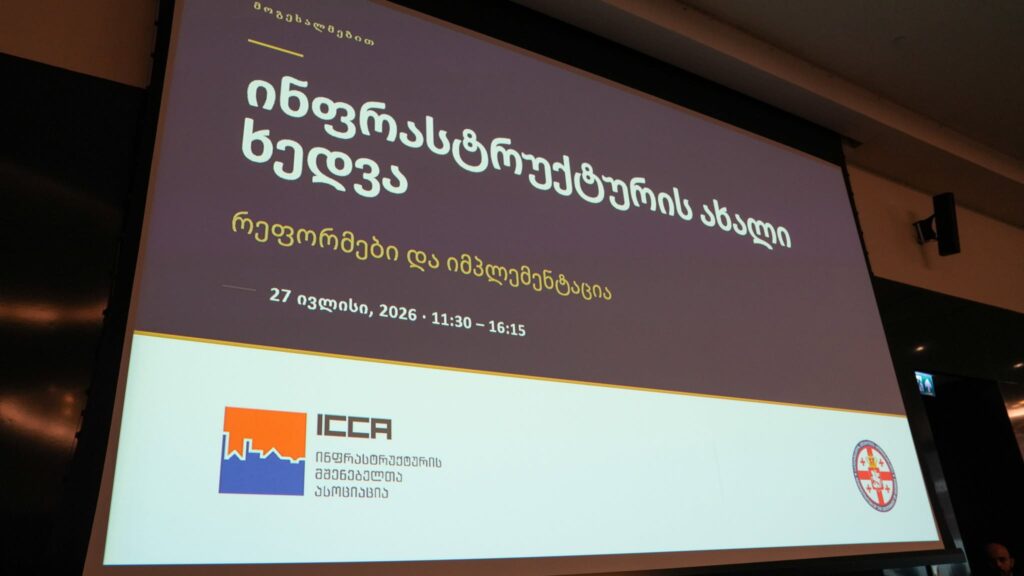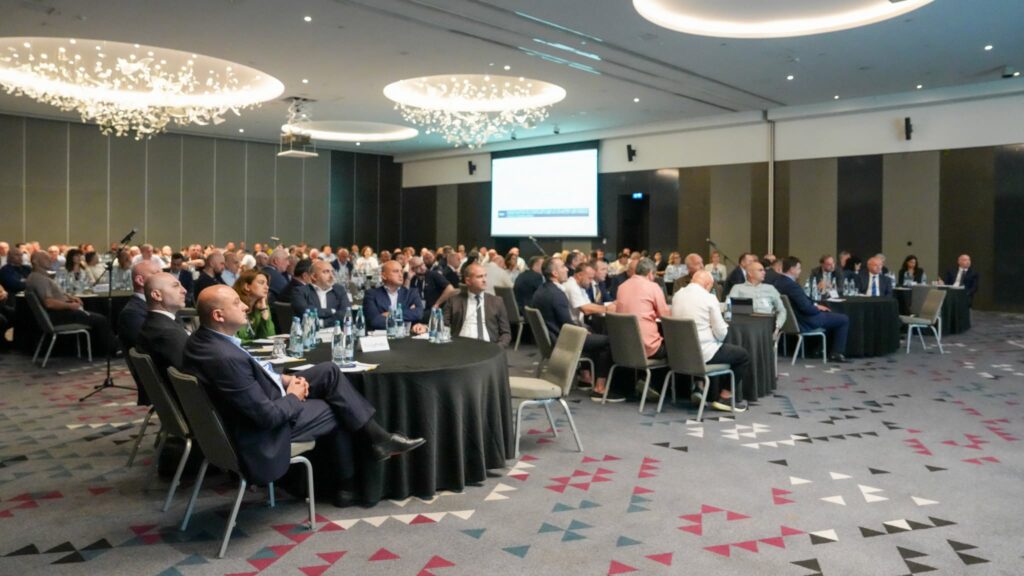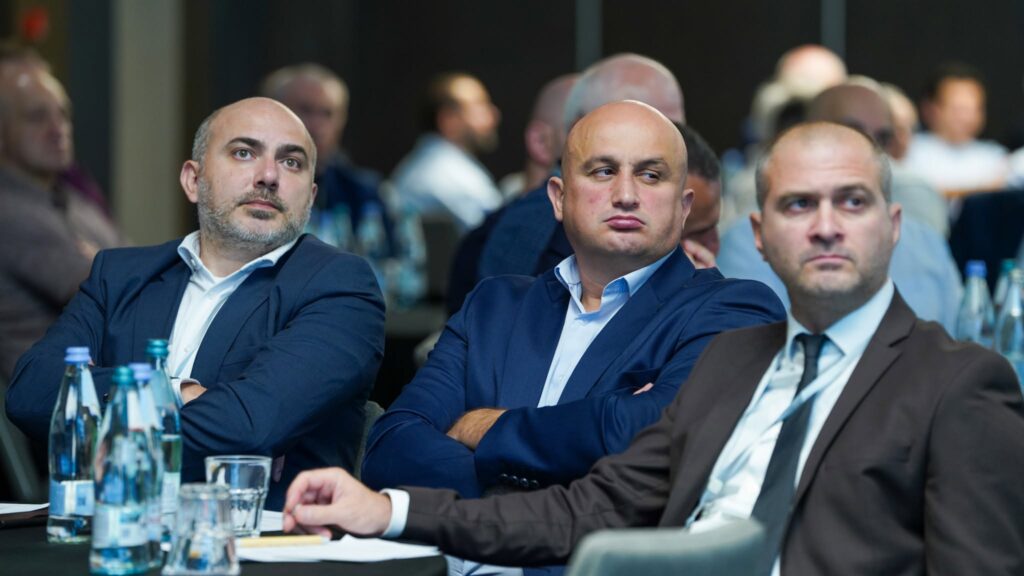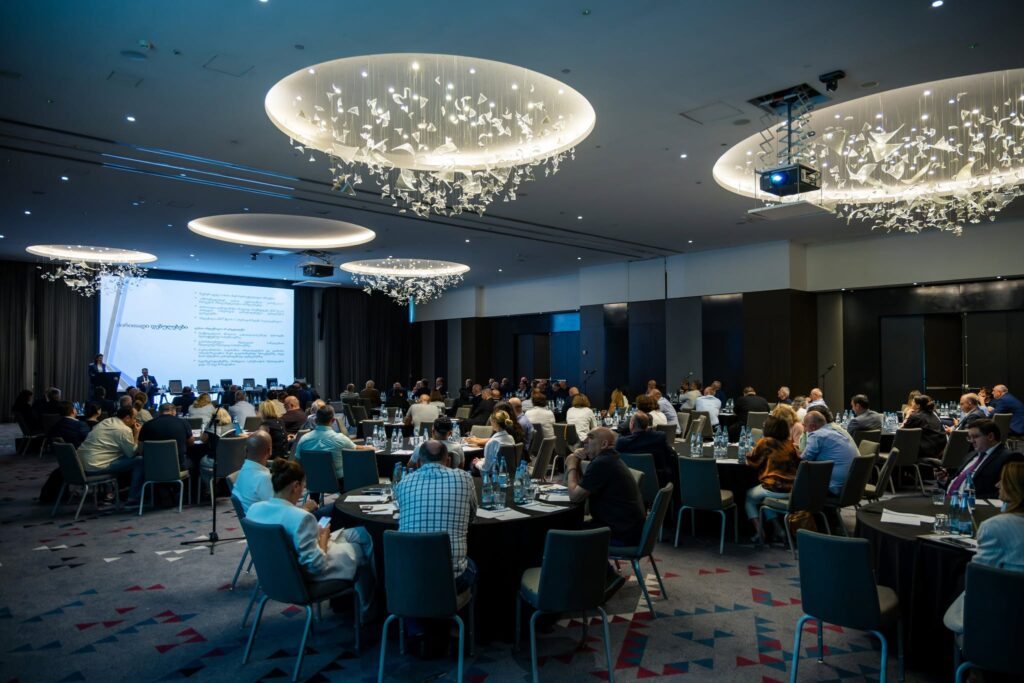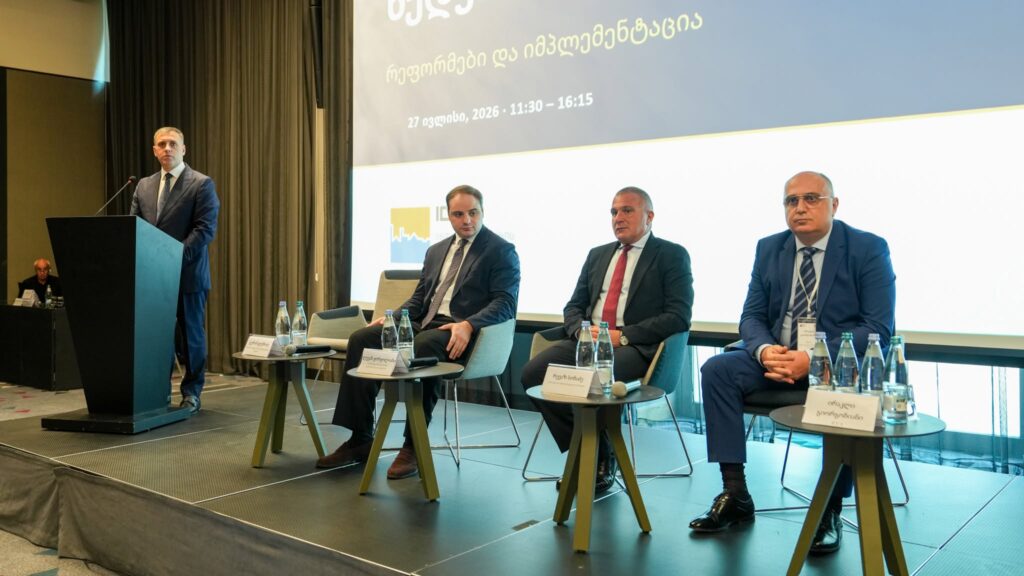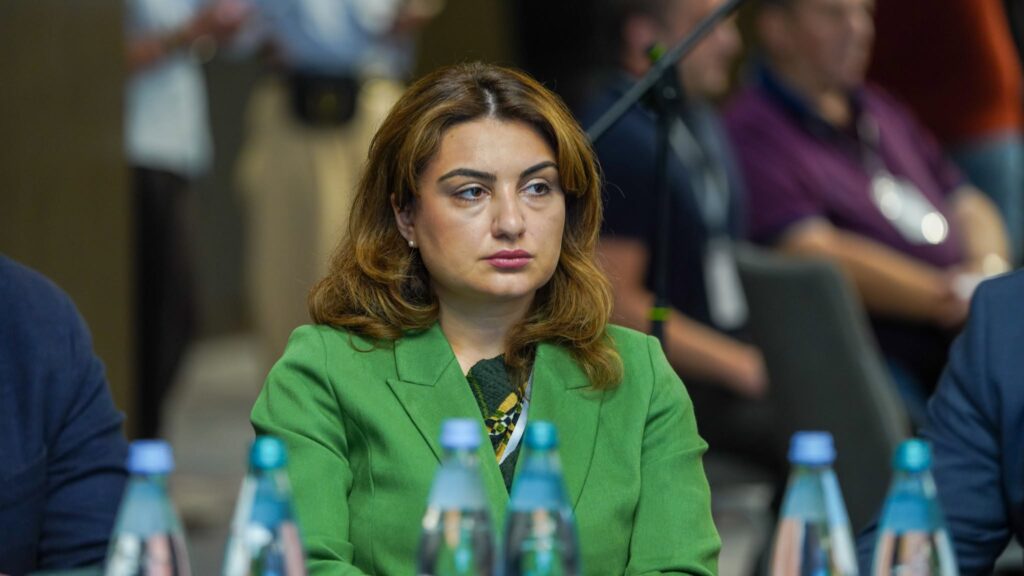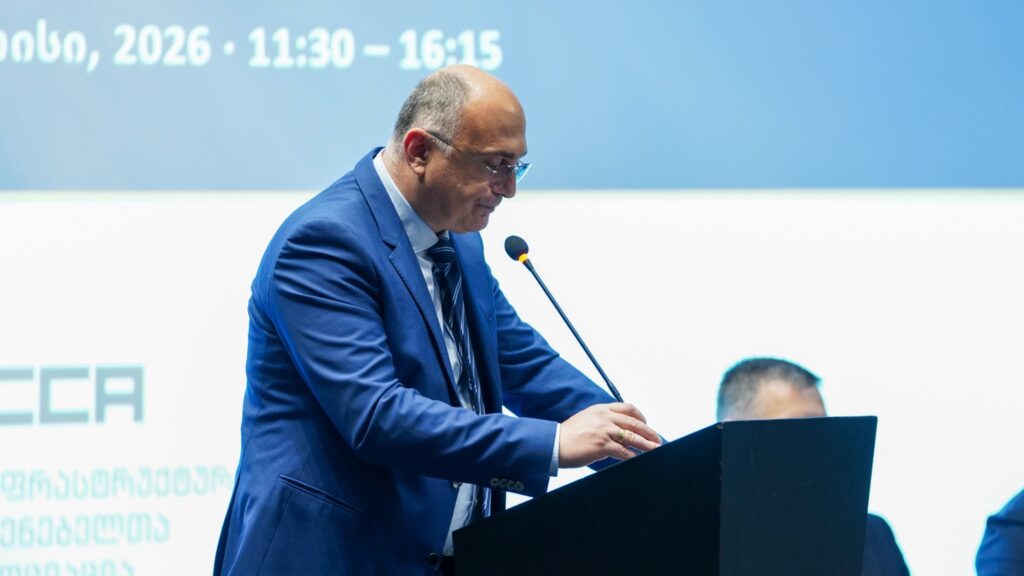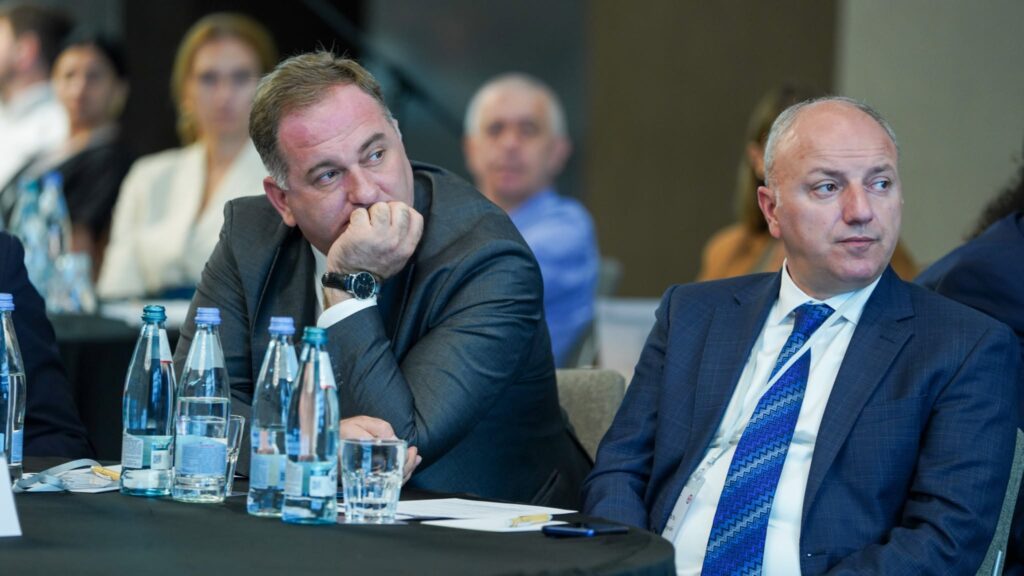
The main topic of the event was the ongoing legislative and systemic changes in the infrastructure sector, new regulations, and their practical implementation.
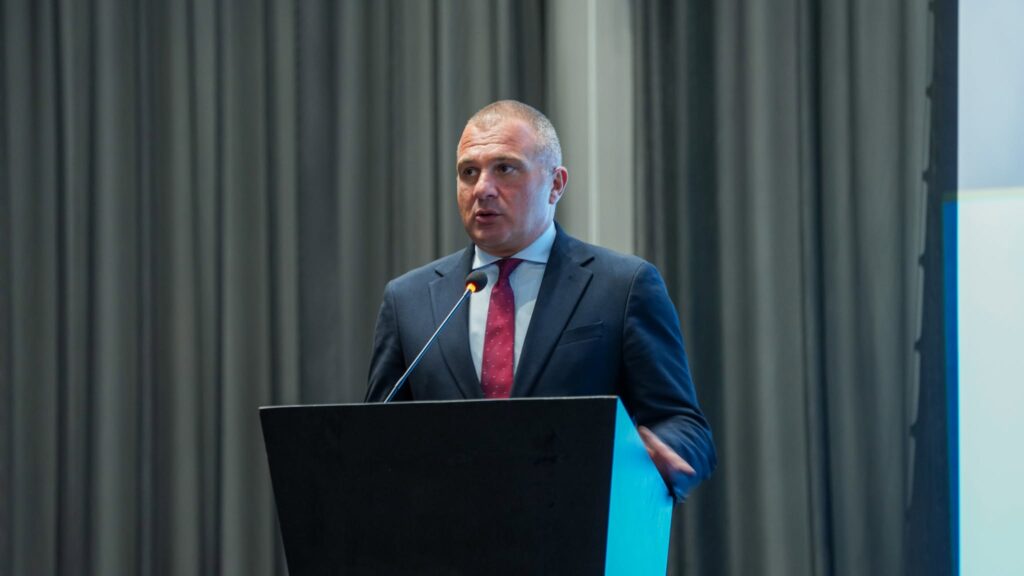
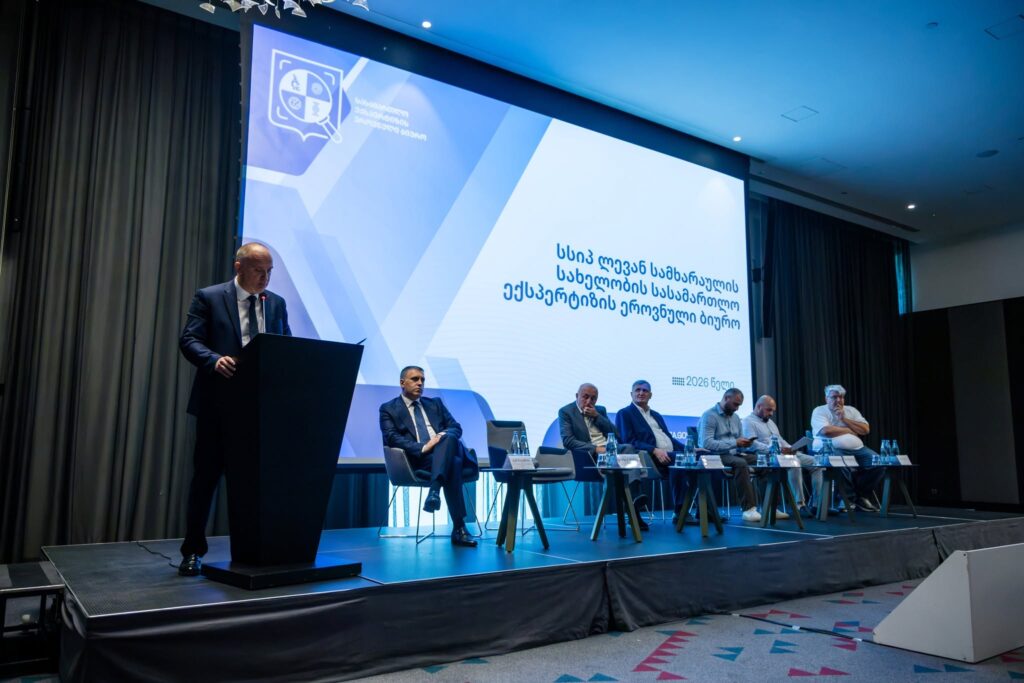
Speakers at the meeting included Head of the Government Administration of Georgia Levan Zhorzholiani, Minister of Infrastructure of Georgia Revaz Sokhadze, Head of the Government Effectiveness Department Guram Dumbadze, and Executive Director of the Infrastructure Construction Companies’ Association Irakli Giorgobiani. Deputy Chairperson of the Roads Department of the Ministry of Infrastructure Salome Tsurtsumia and Head of the Levan Samkharauli National Forensics Bureau Giorgi Murvanidze also addressed the audience.
The meeting participants discussed in detail the legislative and systemic changes implemented in 2026 in a broad context. They deliberated on the new legislative framework and regulations for price indexation. During the discussion, special attention was given to the practical issues of recommended market values for construction resources, as well as labor remuneration, machinery and equipment, and road transportation related to the procurement of construction works.
The Executive Director of the Association, Irakli Giorgobiani, emphasized the strategic importance of the sector and highlighted the necessity of introducing new rules for price indexation and pricing, which will protect the private sector from instability. Furthermore, he noted the importance of establishing strict anti-dumping mechanisms and realistic estimated values in order to avoid stalled projects and legal disputes.
Members of the association also discussed contractual reform and the proper allocation of risks. According to them, the success of a project begins at the planning and initiation stage; therefore, it is essential that risks are fairly distributed between the client and the contractor, including the establishment of clear deadlines for decision-making.